
If you’re reading headlines about inflation or mortgage rates, you may see something about the recent decision from the Federal Reserve (the Fed). But what does it mean for you, the housing market, and your plans to buy a buy a home? Here’s what you need to know.

Inflation and the Housing Market
While the Fed’s working hard to lower inflation, the latest data shows that, while the number has improved some, the inflation rate is still higher than the target (2%). That played a role in the Fed’s decision to raise the Federal Funds Rate last week. As Bankrate explains:

“Keeping its inflation-fighting streak alive, the Federal Reserve has raised interest rates for the 10th time in 10 meetings . . . The hikes aimed to cool an economy that was on fire after rebounding from the coronavirus recession of 2020.”

While the Fed’s actions don’t directly dictate what happens with mortgage rates, their decisions do have an impact and contributed to the intentional cooldown in the housing market last year.

How This Impacts You
During times of high inflation, your everyday expenses go up. That means you’ve likely felt the pinch at the gas pump and in the grocery store. By raising the Federal Funds Rate, the Fed is actively trying to lower inflation. If the Fed is successful, it could also ultimately lead to lower mortgage rates and better home buying affordability for you. That’s because when inflation is high, mortgage rates tend to be high. But, as inflation cools, experts say mortgage rates will likely fall.

Where Experts Think Mortgage Rates and Inflation Will Go from Here
Moving forward, both inflation and mortgage rates will continue to impact the housing market. Economists at the National Association of Realtors (NAR) are saying that mortgage rates are likely to descend lower later in the year as the consumer price inflation calms down.

A Chief Economist at the Mortgage Bankers Association (MBA) also explains that we can continue to expect that mortgage rates will keep drifting down over the year as the economy slows.

While there’s no way to say with certainty where mortgage rates will go from here, the experts think mortgage rates will trend down this year if inflation comes down too. To stay informed on the latest insights, connect with a trusted real estate advisor. They keep their pulse on what’s happening today and help you understand what the experts are projecting and how it could impact your homeownership plans.

Bottom Line
Don’t let headlines about the latest decision from the Fed confuse you. Where mortgage rates go from here depends on what happens with inflation. If inflation cools, mortgage rates should tick down as a result. Let’s connect so you have expert insights on housing market changes and what they mean for you.
Is now the time to buy a home? To put it simply, yes. One couldn’t blame homebuyers for being hesitant based on last year’s market, but that was LAST year’s market. As of this writing, inventory is up and there’s more variety in the market. Why settle when you can buy the home of your dreams? The odds of that happening are much greater than they were this time last year and optimism is growing.

Chances are, things are going to turn around big time by the end of the 3rd or early into the 4th quarter of the year. More and more homes will be on the market. Why wait when you can secure historically low interest rates right now? Yes, rates are indeed higher than they were pre-pandemic. They’re still a full percentage point lower than the national average just fifteen years ago.

Reports from the Federal Government pertaining to employment are also quite encouraging. Over 200,000 new jobs were added to the economy at the beginning of the year, bringing unemployment down to 3.5%. When more people have money to spend, they will spend it. That’s good for the economy as a whole.

If you’ve been thinking about buying a home, maybe it’s time you consulted a trusted real estate professional. It’s a great time to get started!

Yard sales are a great way to convert items that you hardly ever use into cash that can be saved, donated, or put towards a large purchase. However, a successful yard sale takes a considerable amount of preparation and planning. Here are some tips on how to hold a great yard sale.

Set a Goal
First, it’s a good idea to think about why you want to hold a yard sale. Are you hoping to generate income or use the sale to get rid of items you’re no longer using? Having a goal in mind can help you decide what to sell, how to price your items, and how flexible you want to be with hagglers.

Choose the Right Date
The best days to host a yard sale are usually Friday and Saturday. Consider the first Friday or Saturday of the month, after most people receive their paychecks and have more money to spend. Try to pick a date and time when you expect the weather to be mild and dry. You can’t predict or control the weather, but you can do a little internet research to see which weekends have had the best weather historically.

Price Out Items as You Gather Them
T
o avoid rushing, don’t price everything on the day before the sale. As you are collecting items to sell, you can create a comprehensive price list or go ahead and label each item with a price sticker. When pricing each item, think like your customers. They want every item to be at a steep discount.

Properly Advertise Your Yard Sale
Hang flyers and post online ads about the sale a couple weeks before it begins. You should also inform the people you know on social media a few days before the sale. Highlight any sought-after items that will be available in your sale, which can include furniture, specialty tools, collectibles, and toys. Make sure that you include the date and time of the sale as well as your full address.

Complete Preparations Early
In the week preceding the sale, gather as many tables as possible. If your friends or family can lend you a table, call them to ask well ahead of time. You should also have a cash box on hand with a wide variety of bills. Some additional items you may need include:

  • Batteries
  • Extension cords
  • Light bulbs
  • Calculator
  • Chairs
  • Cooler with drinks
  • Hand sanitizer
  • Pens
  • Receipt book
  • Sold tags
  • Paper or plastic bags

Make Sure All Items are in Good Condition
Every item you’re selling should be in good, usable condition. Make sure that you include working batteries in electronic devices and pump air into any basketballs or soccer balls. Have someone on hand during the day to rearrange items and fold clothing so everything looks tidy and well cared for.

As long as you choose the right date, properly advertise the sale, and prepare for the event, you should avoid most of the problems that can occur when hosting a yard sale.

Whether you currently own a home or are thinking of purchasing one, you may be looking for ways to build equity. Home equity is the overall difference between the amount you owe on your mortgage loan and your home’s market value. Home equity can be used to take out a loan, invest, build long term wealth, or sell your home for more than you owe and keep the profit.

The equity you have access to will increase as you make payments that pay off your mortgage balance. It can also grow when your home’s value increases. The following details five of the quickest ways to build home equity.

1. Make a Larger Down Payment
The simplest and quickest way to build equity in a home is to make a large down payment when you first buy the property. The down payment you make is immediate equity. Let’s say that you’re buying a home for $200,000. With a $10,000 down payment, you’ll owe $190,000 on the mortgage and have $10,000 in equity.

If you can afford it, you could instead choose to make a down payment of $40,000, which means that you would owe $160,000 on the mortgage and have $40,000 in equity when you first move in. Keep in mind that a 20% down payment will also remove the private mortgage insurance requirements for conventional loans, which is an added benefit.

2. Make Mortgage Payments More Often
Only a percentage of the mortgage payment you make each month is put towards the principal of your house. The remainder of the payment goes towards interest and taxes. When you make additional payments or provide a payment that’s higher than the minimum amount, you are putting more money toward the principal and increasing your equity.

3. Consider a 15-year Mortgage
If you take out a 15-year mortgage as opposed to a 30-year one, your monthly mortgage payments will be significantly larger. When you take this approach, you’ll be paying off more of the principal each month, which will help you build equity quicker. You’ll also pay less interest over the course of the loan.

If you’ve already purchased your home, you could decide to refinance the mortgage loan, which would allow you to switch from a 30-year loan to a 15-year option and build equity faster. Make sure that you can afford the higher monthly payments before choosing this solution, and make sure you take current interest rates into account as well.

4. Invest in Home Improvement and Remodeling Projects
You can also build equity in your home by investing in home improvement and remodeling projects that will increase the home’s value. The most popular renovations include kitchen and bathroom remodels. Make sure that you select projects that will get you the best return-on-investment (ROI). Reach out if you want to discuss projects with the highest ROI in our area.

5. Use Gifts and Windfalls
Consider building equity by using any gifts or windfalls you receive to pay down the balance of the loan. Do you receive birthday or holiday gift cards? If so, these can be converted to cash and added to your mortgage payment. The same is true of any inheritance you receive.

Building home equity gives you financial security and allows you to prepare for your future. By making a large down payment, paying more money each month, and improving the quality of your home, you can build equity relatively quickly.

There’s been a lot of focus on higher mortgage rates and how they’re creating affordability challenges for today’s homebuyers. It’s true that rates rates climbed dramatically since the record-low we saw during the pandemic. But home affordability is based on more than just mortgage rates – it’s determined by a combination of mortgage rates, home prices, and wages.

1. Mortgage Rates
While mortgage rates are higher than they were a year ago, they’ve hovered primarily between 6% and 7% for nearly eight months now. From September 2022-today, 30-year fixed rate mortgages have experienced some volatility. And even a small change in mortgage rates impacts your purchasing power. That’s why it’s so important to lean on your team of real estate professionals for expert advice to stay up to date on what’s happening in the market. While it’s hard to project where mortgage rates will go from here, many experts agree they’ll likely continue to remain around 6%-7% in the immediate future.

2. Home Prices
Over the past few years, home prices appreciated rapidly as the record-low mortgage rates we saw during the pandemic led to a surge in buyer demand. The heightened buyer demand happened while the supply of homes for sale was at record lows, and that imbalance put upward pressure on home prices. However, today’s higher mortgage rates have slowed down price appreciation.

And, the truth is, home price appreciation varies by market. Some areas are seeing slight declines while others have prices that are climbing. The divergence in home price changes across the U.S. reflects a tale of two housing markets. Declines in the West are due to the tech industry slowdown and a severe lack of affordability after decades of undersupply. The consistent gains in the Southeast and South reflect strong job markets, in-migration patterns, and relative affordability due to new home construction.

To find out what’s happening with prices in your local market, reach out to a trusted real estate agent.

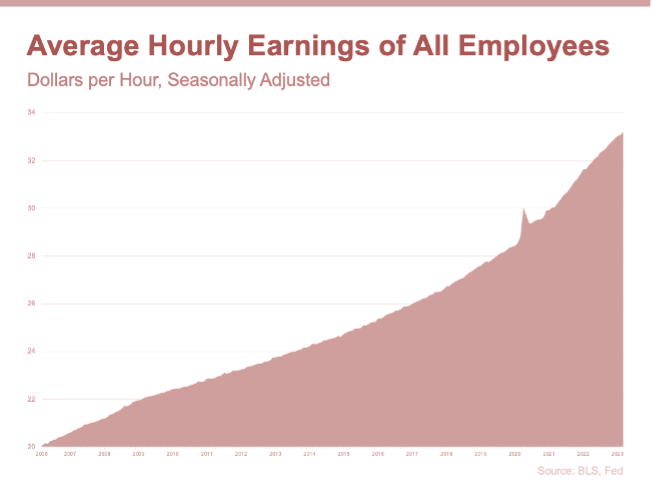
3. Wages
The most positive factor in affordability right now is rising income. The graph below uses data from the Bureau of Labor Statistics (BLS) to show how wages have grown over time:

Higher wages improve affordability because they reduce the percentage of your income it takes to pay your mortgage since you don’t have to put as much of your paycheck toward your monthly housing cost.

Home affordability comes down to a combination of rates, prices, and wages. If you have questions or want to learn more, reach out to a real estate professional who can explain what’s happening locally and how these factors work together.

Bottom Line
If you’re planning to buy a home, knowing the key factors that impact affordability is important so you can make an informed decision. To stay up to date on the latest on each, let’s connect today.

If you’re buying a home this spring, today’s housing market can feel like a challenge. With so few homes on the market right now, plus higher mortgage rates, it’s essential to have a firm grasp on your homebuying budget. You’ll also need a sense of determination to find the right house and act quickly when you go to put in an offer. One thing you can do to help you prepare is to get pre-approved.

To understand why it’s such an important step, you need to know what pre-approval is. As part of the process, a lender looks at your finances to determine what they’d be willing to loan you. From there, your lender will give you a pre-approval letter to help you understand how much money you can borrow.

A pre-approval is an indication from your lender that they are willing to lend you a certain amount of money to buy your future home. Keep in mind that the loan amount in the pre-approval letter is the lender’s maximum offer. Ultimately, you should only borrow an amount you are comfortable repaying.

Basically, pre-approval gives you critical information about the homebuying process that’ll help you understand how much you may be able to borrow so you have a stronger grasp of your options. And with higher mortgage rates impacting affordability for many buyers today, a solid understanding of your numbers is even more important.

Pre-Approval Helps Show You’re a Serious Buyer
That’s not the only thing pre-approval can do. Another added benefit is it can help a seller feel more confident in your offer because it shows you’re serious about buying their house. And, with sellers seeing a slight increase in the number of offers again this spring, making a strong offer when you find the perfect house is key.

As a recent article from the Wall Street Journal (WSJ) says:
“If you plan to use a mortgage for your home purchase, pre-approval should be among the first steps in your search process. Not only can getting preapproved help you zero in on the right price range, but it can give you a leg up on other buyers, too.”

Getting pre-approved is an important first step when you’re buying a home. It lets you know what you can borrow for your loan and shows sellers you’re serious. Connect with a local real estate professional and a trusted lender so you have the tools you need to purchase a home in today’s market.

Owning a home means having a place that’s solely your own and provides the space, features, and location you and your loved ones need. But what happens when your needs change? If this hits home for you, it may be time to make a move.

According to the latest Home Buyers and Sellers Generational Trends Report from the National Association of Realtors (NAR), the average person has lived in their current house for ten years. If you’ve been in your home for a while, think about how much in your life has changed since you moved in. Even if you thought it would be your forever home when you bought it, it doesn’t have to be. Work with a local real estate agent to explore all your options in today’s market before settling for your current home.

That’s actually what a lot of homeowners are doing right now. A recent survey from Realtor.com finds that, of people who are considering selling in 2023, one in three are thinking about moving because their home no longer meets their needs. And according to the same report from NAR, that’s consistent with this year’s top reasons for selling, which include:

  • Want to move closer to friends or family
  • Moving due to retirement
  • Home is too small or too large
  • Change in family situation
  • Job relocation

If things in your life have changed, it may be time to make a move. And there’s good news: it’s still a great time to sell. Here’s why.

We’re in a strong sellers’ market. That means homes listed at market value and in good condition are getting attention from buyers and selling quickly. Lean on your expert real estate advisor for the best advice on getting your house ready to sell.

Your equity can power your next move. There’s a good chance you have a significant amount of equity right now thanks to record levels of price appreciation in recent years. When you sell, you can use that equity to help afford your next home. In fact, NAR’s report from above shows 38% of recent buyers used the money from the sale of their previous home to cover the down payment on their next one. Work with a local real estate agent to learn how much equity you have and what you can do with it in today’s housing market.

If your home no longer meets your needs, consider selling it so you can find your dream home. Let’s connect so you can learn about your options.

What is a home inspection?
A home inspection is an examination of the condition and safety of a piece of real estate, often conducted when the home is being sold. A qualified home inspector will assess the heating and cooling system, water and sewage systems, other plumbing, and electrical work, and look for any potential fire or safety hazards.

Inspections and Repairs are Popular Again
During the housing market frenzy of the pandemic, many buyers waived inspections to be more competitive with their offer. However, a recent Realtor.com survey found that inspections and repairs are becoming popular again:

  • 95% of buyers are requesting home inspections.
  • 95% of sellers are making some updates or repairs prior to listing.
  • 67% of buyers are asking for repairs as a result of the home inspection.
  • $14,163 is the average amount sellers spend on updates/repairs prior to listing.

The inspection of a major part of the home selling process. Let’s connect so you have an expert on your side who can help you determine the repairs and updates your house needs before you sell.

In the United States, there are over 72 million millennials. If you’re part of that generation and have thought about buying a home, you aren’t alone. According to Zonda, 98% of millennials want to become a homeowner at some point if they aren’t already. But why? There are plenty of reasons you may choose to become a homeowner. Here’s why other millennials have made that decision (see graph below):

 This graph shows why millennials are buying homes according to Zonda’s 6th annual millennial survey. The top reasons include building equity, a change in life stage, wanting stability, rising home values, and wanting to make somewhere truly their own. Here’s a look at each in more detail.

Building equity – Homeownership is a long-term investment that allows you to build wealth, increase your net worth, and become more financially stable. Beyond that, the alternative to owning a home is typically renting. With the way rents have risen so dramatically over time, it may make sense to build your own equity instead of the equity of the person you’re renting from.

A change in life stage – As a millennial, you’re reaching your prime homebuying years. That means you may be at the point where you need more space or a different location.

Stability or settling down – This could mean establishing your career or just generally deciding more concretely what you want your life to look and feel like. As that idea becomes clearer, you may want to establish that lifestyle in a particular place and put down roots.

Rising home values – By purchasing a home, you own an asset that traditionally increases in value over time. That can mean your home will have a higher resale value if you decide to move again.

Wanting to make somewhere “mine” – Owning a home gives a sense of freedom because you can customize it however you want, make updates as you see fit, and be yourself in a place that’s solely your own.

There are plenty of great reasons why millennials are buying homes today. If you’ve thought about becoming a homeowner and any of these reasons resonate with you too, let’s connect to explore your options.