Blog

  • 7 Benefits of Pressure Washing Your House

    Pressure washing is a great way to clean the exterior of your home without having to scrub down every nook and cranny. You might be surprised by what parts of your home you can pressure wash—siding, concrete, and even outdoor furniture and cushions are all good candidates. And though having a squeaky-clean home is certainly a perk, there are a few other big benefits of pressure washing you should consider.

    What Exactly Is Pressure Washing?
    Pressure washing uses highly pressurized water to wash away dirt, debris, and other buildup on hard surfaces. People often use the terms power washing and pressure washing interchangeably, and it’s true that they’re very similar. The only difference between power and pressure washing is that the former uses heated water while the latter does not. Because of their similarities, we’ll discuss the benefits of both power and pressure washing here:

    7 Pressure Washing Benefits
    In addition to cleaning the exterior of your home, pressure washing has several other benefits.

    1. Prevents Damage
    The substances that build up on your home can stain the exterior surfaces and even cause damage. Mold, mildew, and algae can grow and feed on the paint, deteriorating the siding over time. Power washing allows you to remove these harmful substances from your home’s exterior and gets into the tight spaces that you might miss otherwise.

    2. Saves Money
    As the saying with health goes, an ounce of prevention is worth a pound of cure; you can apply the same philosophy to your home. Pressure washing the outside of your home and protecting it from damage that buildup can cause will be less costly in the long run than repairs. Preventative maintenance helps your home retain its value while keeping it looking fresh and clean.

    3. Prevents Allergen Buildup
    Airborne mold spores, pollen, and dust mites are all allergy triggers that affect millions of adults and children across the US. Power washing removes all of those nasty substances, preventing them from making their way into your home and negatively impacting your family’s health. By adding power washing the exterior of your home to your cleaning list once a year, you can help keep everyone in your home more comfortable.

    4. Saves Time
    Can you imagine getting a bucket full of soap and water and hand-washing the entire exterior of your home? It would take a long time and a lot of elbow grease. Pressure washing is efficient and effective, saving you time and effort that you can redirect elsewhere (like spring cleaning indoors!).

    5. Primes Surfaces
    Leaving dirt, grime, or dust on your home and painting over it is a surefire way to ruin your paint job. New paint adheres best to a clean, dry surface. If you’re planning to paint or refinish the outside of your home, a good power washing beforehand can ensure that your new job looks great and lasts for a long time.

    6. Lets You See What Needs Repairs
    It can be more difficult to spot imperfections on your home’s exterior than in the interior, which means you may not catch issues until they become a big problem. Pressure washing your home will allow you to see any small or large dings, scrapes, or other forms of damage so that you do repairs promptly.

    7. Increases Curb Appeal
    It may go without saying, but a clean house looks better than a dirty one, both inside and out. Power washing your home can be an instant facelift for your exterior, especially if you’ve never cleaned the outside of your home or it’s been a while. And if you’re trying to sell your home, everything must look as good as it can, inside and out.

    How Much Does Power Washing Cost?
    The cost of power washing a 2,000-square-foot home usually averages between $200 and $300. Hiring a professional pressure washer near you comes with its perks; they’ll bring their own washer and cleaning solution, and experienced professionals will know how to get the job done without damage. Power washing uses high-powered jets, and if you don’t do the job properly, you can damage your gutters, siding, and landscaping.

    Can You DIY Pressure Washing?
    If you feel confident and want to DIY your pressure washing project, you can generally rent a pressure washer for between $40 and $100 from your local home improvement store. In the market to buy a power or pressure washer? An electric model will set you back anywhere from $100 to $400, and a gas model usually runs between $300 and $600.

  • Evaluating Your Wants and Needs as a Homebuyer

    When entering the homebuying process, it’s important to evaluate and prioritize your wants and needs. This will help you focus your search, save time, and make informed decisions. Here are some key factors to consider:

    1. Budget: Determine your budget by assessing your finances, including your income, savings, and expenses. This will help you understand how much you can afford to spend on a home, including the down payment, mortgage payments, and ongoing homeownership costs.
    2. Location: Consider the location that best suits your lifestyle and needs. Think about proximity to work, schools, amenities, transportation, and any other factors that are important to you. Research the neighborhoods you’re interested in to ensure they align with your preferences and requirements.
    3. Size and Layout: Evaluate your space requirements, including the number of bedrooms, bathrooms, and overall square footage. Consider your current needs, as well as any future plans that may impact your space requirements, such as starting a family or working from home.
    4. Property Type: Determine the type of property that suits your lifestyle and preferences. Options include single-family homes, condominiums, townhouses, or multi-family properties. Each type has its own advantages and considerations, so weigh the pros and cons based on your needs.
    5. Features and Amenities: Make a list of the features and amenities that are essential to you. This could include a specific architectural style, a backyard, a garage, a swimming pool, or a specific layout. Differentiate between must-haves and nice-to-haves to help prioritize your search.
    6. Condition and Renovation Potential: Consider whether you prefer a move-in ready home or if you’re open to doing renovations or updates. Assess your comfort level with potential repairs or remodeling projects and factor that into your search.
    7. Resale Value: While it’s important to focus on your current needs, it’s also wise to consider the potential resale value of the property. Look for factors such as the neighborhood’s desirability, property appreciation trends, and any upcoming developments that may impact the value.
    8. Lifestyle Factors: Think about your lifestyle and how the home will support it. Consider factors such as outdoor space, proximity to parks or recreational areas, access to amenities like gyms or shopping centers, and any specific requirements related to your hobbies or interests.

    By evaluating and prioritizing your wants and needs, you can streamline your home search and make informed decisions. It’s important to stay flexible and open to adjustments along the way, as your priorities may evolve during the process. Working with a knowledgeable real estate agent can also help you navigate your options and find a home that meets your criteria.

  • The Cost of Selling on Your Own

    Selling a property on your own, also known as “For Sale By Owner” (FSBO), can be an appealing option for homeowners looking to save money on real estate agent commissions. However, it’s important to understand the costs involved in selling on your own, as they can add up and potentially outweigh the savings.

    1. Marketing and Advertising: When selling on your own, you’ll need to invest in marketing and advertising your property. This can include professional photography, virtual tours, online listings, signage, brochures, and more. These costs can vary depending on the level of exposure you want for your property.
    2. Time and Effort: Selling a property requires a significant amount of time and effort. As a FSBO seller, you’ll need to handle all aspects of the selling process, including scheduling and conducting showings, negotiating offers, managing paperwork, and coordinating with potential buyers. Consider the value of your time and whether it’s worth the savings to handle these tasks yourself.
    3. Legal and Documentation: Selling a property involves various legal and documentation requirements. You may need to hire an attorney to review contracts, ensure compliance with local regulations, and handle any legal issues that may arise. These costs can vary depending on your location and specific needs.
    4. Lack of Market Knowledge: Real estate agents have extensive knowledge of the local market, pricing trends, and comparable sales. Without this expertise, you may have difficulty setting the right listing price for your property, potentially leading to a longer time on the market or selling for less than its true value.
    5. Negotiation Skills: Negotiating with buyers can be a challenging aspect of selling a property. Real estate agents are experienced negotiators who can help you get the best possible price and terms. Without this expertise, you may find it difficult to navigate negotiations effectively.
    6. Limited Exposure: One of the main advantages of working with a real estate agent is the exposure they can provide through their network, online platforms, and marketing efforts. As a FSBO seller, you may have limited access to potential buyers, resulting in reduced demand and potentially a longer selling process.

    It’s crucial to carefully consider these costs and potential challenges before deciding to sell on your own. While it’s possible to save on agent commissions, selling a property without professional assistance may not always be the most cost-effective or efficient option.

  • Home Renovations on a Budget

    If you took a peek at a new homeowner’s search history, you’d likely find key terms like, “Home renovations on a budget,” “How much does it cost on average to do A, B, C,” or “Cheap hacks to fix blah, blah, blah…” New homeowner or not, it’s safe to say that anyone who’s has taken a trip to their local Lowes or Home Depot as of late, has had to pick their jaw up off the floor when faced with the monumental price increases of everything from lumber to plumbing and even the snack size can of Pringles you have to have while standing in line for the self-checkout. “I can store nails or something in the can afterward,” you tell yourself. Yeah, sure…

    So, is renovating on a budget even possible these days? Well, yes. After all, a budget is going to vary from person to person. Even in a general sense, there are decisions you can make to cut corners and save cash without compromising the quality or safety of your project.

    DIY
    If you can do it, save money by foregoing professional installation. If you’ve always wanted to learn how to install a wall outlet, fix a sink trap, tile a mudroom, or replace the crumbling drywall in the den, there are pages of YouTube videos explaining how to do just that. Also, if you visit the website of your favorite hardware or big box store and search for some of the materials needed to complete your project, you can occasionally find installation tutorials right on the product page.

    Bargain Shop
    You’ve elected to tackle the project yourself, but the cost of the available materials has you burying your head into a tear-soaked pillow and screaming, “Why me?” not. Just because the last million-dollar home you visited featured imported Italian marble tiles in the entryway doesn’t mean you have to or need to spend that much money. Measure the length and width of the room and multiply those numbers together. That gives you the square footage. See how much square footage each box of hardwood, vinyl, or laminate you intend to buy is supposed to cover. If a box covers 14 sq ft and you have 144 sq ft to cover, you’ll need just 10.2 boxes. So, buy 11. No, buy 12. You see, you should always buy 1 more additional box than accounted for to cover your mistakes.

    Don’t Fall Prey to Brand Names
    You can afford what you can afford. Minimum grade underlayment is the minimum grade, which is to say it will work just fine! It’s perfectly acceptable and will keep you under budget. The last thing you want to do is spend double what you paid for your flooring to lay it. Most vinyl and laminate plank flooring requires nothing more than a circular saw, pencil, straight edge, rubber hammer, and a small block of wood to bump and lock the pieces together. Don’t buy a fancy kit because Chip and Joanna put their faces on it. Oh, and don’t forget to check Craigslist or Facebook Marketplace for deals on materials someone else is trying to unload for much less than they probably paid for it.

    Defer to the Experts
    You know who I’m talking about. Put that old guy or gal to work. Mine’s pushing 80 and just spent the last 3 days cutting copper pipe, loading plywood into a Lowes rental truck, and maneuvering drywall in an 8×7 bathroom. You can consult someone with a fancy schmancy certificate that allows them to charge you $50 an hour to point a flashlight or you can ask someone you know and trust if they’ll take payment in cheeseburgers or beer. Look, there are times where you should absolutely hire an expert but that comes with a cost. Ask someone older, wiser, or more experienced than you how to install a new lighting fixture before you shell out a house payment for the privilege of playing trivia games on your phone while someone else does it and you learn nothing.

    If you’re a new homeowner, the thought of becoming your own maintenance person, roofer, plumber, electrician, and landscaper can be a little distressing. Just think of the memories you’ll make as your sister shows you how to wallpaper while you’re on an 8-foot ladder with its legs centimeters from the top of the stairs. Priceless.

  • Best Way to Clean Every Type of Floor

    There is one universal truth for every type of flooring: It needs to be cleaned! Of course, different types of hard flooring have different care and cleaning instructions, and it’s important to use the right methods to not only make your flooring look its best but also to avoid damaging the finish.

    So, like cleaning various kitchen surfaces, the best way to clean floors heavily depends on your specific flooring material. Whether you have low-maintenance vinyl or something a little more finicky like marble, we’ve got the top cleaning methods and five-star products to make your floor shine.

    How to Clean Hardwood Floors
    Keep dust and debris off hardwood floors by sweeping or vacuuming daily if possible. When vacuuming, be sure to set your vacuum on the hard floor setting—this turns off the brush roll to avoid scratching the wood. Mop with a damp microfiber mop (microfiber uses less water than other mops). Be careful about how much water you use when mopping. Excessive water on hardwood can cause swelling and can damage the stain if left to sit.

    How to Clean Laminate Floors
    Ridding laminate floors of winter salt and summer dirt is no joke. With laminate, it’s essential to use a laminate-specific floor cleaner and a damp microfiber mop. Never use a steam cleaner or a dripping wet mop, which can easily damage laminate. Use a damp cloth to blot up spills immediately (standing liquid causes laminate to bubble and swell). For stubborn stains like oil, paint or markers; use a white cloth with a small dab of acetone nail polish remover.

    How to Clean Vinyl Floors
    Luxury vinyl plank flooring is fast becoming one of the top flooring choices for designers and builders and for good reason. It’s durable, easy to clean and can withstand a lot more moisture than laminate or hardwood. Sweep or vacuum (on the hard surface setting) regularly to prevent dirt and debris from accumulating. Clean as needed with a damp or wet mop, and a nonabrasive floor cleaner. Never use soap, wax or oil-based detergents, which can dull the finish and leave a greasy film.

    How to Clean Tile Floors
    Tile floors like porcelain or ceramic tile can be cleaned with warm water and mild soap (or a tile-specific cleaner). A steam mop is also a good choice because it cleans and sanitizes tile simultaneously without leaving behind streaks. And because steam cleaners use only water, they won’t damage the grout. Speaking of, avoid cleaning products that contain acids or ammonia which can discolor grout.

    How to Clean Marble Floors
    Clean marble floors first with a dry dusting pad, then use a microfiber mop and marble floor cleaner. Marble is a porous stone, so choosing the right cleaner is vital. Avoid products containing vinegar, ammonia or citrus, which can cause etching (dull discoloration caused by a chemical reaction). Don’t use anything abrasive on marble like scrubbing brushes or scouring pads. Use a pH-neutral cleaner for best results.

    How to Clean Linoleum Floors
    Linoleum flooring is made of wood pulp and cork, so it’s important not to use hot water, a steam mop or an excessive amount of water when cleaning. This can damage the floor and the glue used to install it. Dry mop or sweep the linoleum floors first, then mop. Use a quick-drying microfiber mop with an attached spray bottle for best results instead of a mop and bucket. You can use a linoleum floor cleaner or a mixture of water, one cup of vinegar and a couple drops of dish soap.

    How to Clean Bamboo Floors
    Bamboo flooring is similar to hardwood in its care and cleaning needs. Dust or vacuum (using the hard flooring setting) daily to avoid scratches and damage from dirt and debris buildup. Dust along the grain of the wood for best results. Mop with a microfiber mop. Lightly mist your floor with a gentle floor cleaner and mop along the grain. Never use vinegar or a steam mop on bamboo floors.

    How to Clean Stone Floors
    For natural stone flooring like granite, travertine or limestone; mop with a specialized stone floor cleaner and warm water. Never use vinegar or ammonia products which can degrade the sealant and leave your floors vulnerable to damage and staining. Don’t soak your mop with too much water because moisture can get caught in the natural crevices of the stone and cause mildew.

    How to Keep Floors Clean Longer
    Protect floors with rugs around the house and mats at the front door. Rugs protect floors and help collect dust and debris from settling on the hard floor. It’s also a good idea to enforce a no-shoes policy in your home. Asking family members and guests to take off their shoes upon entering will limit the amount of dirt that is tracked in.

    How to Keep Floors Clean with Pets
    Keep pets properly groomed to keep shedding at a minimum, and regular nail trimmings will avoid scratches on your floor. You can’t stop all the fur from shedding, so plan on dusting and sweeping more frequently when you have pets. Use mats in high-traffic pet areas like under their food bowls and near the front and back doors.

    How Often Should You Clean Floors?
    If you can, sweeping or vacuuming floors daily will keep your floors looking their best. Plan on mopping at least once a week. High-use rooms like the kitchen might require mopping more frequently. Deep clean floors once a month—this is when you can tackle tasks like scrubbing grout, repairing scratches, and applying polish as needed.

  • How to Clean a Mattress

    There are a few rules to follow when washing bedding. Your sheets should be washed once a week, the mattress pad once a month and pillows every six months. But what about how to clean a mattress? Even though it doesn’t come in direct contact with your skin; the mattress, over time, can still collect a buildup of dead skin cells, dust, dried sweat and other allergens.

    To keep your mattress looking and smelling fresh, deep clean it about every six months (same as your pillows). Proper cleaning and care will not only ensure a more comfortable bed, but also lengthen the lifespan of your mattress. Here’s how to clean a mattress with a few easy steps.

    How to Clean Your Mattress
    Tools

    • Vacuum with upholstery attachment
    • Enzyme cleaner or hydrogen peroxide
    • Baking soda
    • Microfiber cloth

    Directions
    Step 1:
    Strip the bed
    Strip off all the bedding including the mattress pad. This is a good time to wash your pillows.

    Step 2: Vacuum
    Using the upholstery attachment, vacuum the entire mattress thoroughly. The vacuum will get rid of dust, crumbs, hair and dander.

    Step 3: Spot clean
    For visible stains on your mattress, spot clean with an enzyme cleaner or a homemade cleaner using hydrogen peroxide (mix 1 cup hydrogen peroxide, 3 tablespoons baking soda and a few drops of dish soap in a spray bottle). Both options are effective on biological stains. Spray the cleaner onto a microfiber cloth, then scrub the stain. Blot away moisture with a clean cloth.

    Step 4: Sprinkle baking soda
    After the mattress is dry from spot cleaning, sprinkle the entire surface with baking soda. Baking soda is a natural deodorizer and will neutralize any lingering odors. Allow the baking soda to sit for at least 15 minutes, but preferably a few hours. Then vacuum up the baking soda using the upholstery attachment.

    How to remove stains from a mattress
    As mentioned above, an enzyme cleaner or hydrogen peroxide are the most effective options for biological stains like urine, sweat or blood. For general dirt and grime stains, use a regular stain remover or even dish soap and water. Apply the stain remover to a cloth or brush, instead of directly on the mattress. You want to avoid getting the mattress too wet, especially if you have a memory foam mattress.

    How to deodorize and sanitize a mattress
    You can deodorize the mattress with baking soda. To sanitize your mattress, a steamer works well (but check manufacturer instructions first). Steam that reaches 250°F will kill bacteria and dust mites. Steam the mattress after vacuuming and spot cleaning. Use short, quick strokes so as not to get the mattress too wet. Allow the mattress to air dry completely before replacing the bedding.

    How to deep-clean a mattress
    To deep clean, follow all the steps above. For an even deeper clean, allow the baking soda to sit overnight to work its magic. It’s also a good idea to open the window after cleaning your mattress—this will air out the mattress and let in some sunlight; UV rays will kill bacteria, dust mites and more.

    How to know when it’s time to replace your mattress
    As a general rule, replace your mattress after about 7 to 10 years. You’ll know it’s time to replace it if you notice sagging, extra noise from coils or springs or a bad smell that you can’t get rid of. If your allergies are acting up, that might be another sign that irritants have built up in your mattress, and it’s time for a new one. Also pay attention to interrupted sleep patterns or frequently waking up with pain without any other known causes. These could be signs that your mattress is no longer offering adequate support.

  • How to Be Eco-Forward at Home

    Some homeowners might think that being sustainable is an all-or-nothing proposition — that they must completely overhaul their lifestyle (and home). In reality, every small change can make a difference. Now that sustainability is top of mind for many of us year-round, here are my favorite tips to be eco-forward at home.

    Eco-forward upgrades
    First, making eco-forward decisions doesn’t necessarily require a big cash outlay. While some sustainable features may have a higher upfront cost, they can lead to long-term savings through reduced energy and water bills and can increase the value of a home. If you’re looking to make an update without breaking the bank, try these easy options:

    • Switch to LED light bulbs. Replacing incandescent light bulbs with energy-efficient LED bulbs is a smart investment to reduce energy consumption in your home. LED bulbs use up to 80% less energy than traditional bulbs and last up to 25 times longer.
    • Use eco-friendly cleaning products. Switching to cleaning products without toxic chemicals, such as vinegar, baking soda, and castile soap, can reduce toxins in your home and minimize your impact on the environment.
    • Install a programmable thermostat. A smart thermostat helps you to set your heating and cooling system to turn off or reduce energy consumption in off-peak hours or when you are away.
    • Get a bidet. Bidets are a sustainable alternative to traditional toilets. They use water instead of paper, reducing the amount of waste generated, and can be a more hygienic option.

    Putting eco-forward behaviors into practice doesn’t even have to require any cash out of pocket. If you’re looking for a lifestyle change, here are a few things you can do immediately:

    • Use public transportation, bike, or walk. If you live in a suburban area, start small by picking one or two days a week to forgo your car. Try your local bus, bike, or walk to your destination, helping to reduce greenhouse gas emissions and improve air quality.
    • Reduce waste. Recycle, compost, and reduce single-use plastic by using reusable shopping bags, water bottles, and food containers.
    • Shop second-hand. Shopping at second-hand marketplaces (thrift stores, consignment shops, neighborhood garage sales) reduces waste and avoids consuming new resources. When you buy used household goods or clothing, you’re lessening the volume of stuff that goes into landfills.
    • Plant a garden. Planting a garden and growing your own fruits and vegetables helps to reduce carbon emissions and your reliance on store-bought produce that has been transported long distances.
    • Wash clothes in cold water. Washing clothes in cold water uses less energy than hot water. Many detergents today are formulated to work just as effectively in cold water.
    • Use a clothesline. Hanging your clothes outside instead of using a dryer saves energy and can extend the lifespan of fabrics. It’s also a great way to enjoy some fresh air while doing your laundry.
    • Support eco-forward businesses. Supporting businesses that prioritize sustainability can have a big impact. Research and choose businesses that source products locally, use renewable energy and reduce waste.

    How to find an eco-forward home
    Whether you’re touring a home in person or virtually, there are things to look for to ensure it’s eco-forward:

    • Energy efficiency. Look for homes that have features such as Energy Star-rated appliances, high-efficiency HVAC systems, and non-toxic, high-performance insulation. Ask about overall energy usage and look for energy-saving measures like LED lighting, programmable thermostats, and solar panels.
    • Water efficiency. Look for homes that have low-flow toilets, showerheads, and faucets, as well as efficient irrigation systems for outdoor space. Ask about water usage and any water-saving measures like rainwater harvesting systems or greywater recycling.
    • Building materials. Look for homes with eco-friendly building materials such as recycled or sustainably sourced wood, bamboo, or cork flooring, low-VOC paints, and natural insulation. Ask about green building certifications the home may have, such as LEED or Energy Star.
    • Outdoor space. Look for homes with outdoor spaces that have been landscaped with native plants that don’t require excessive water use or chemical treatments. Look for evidence of composting, rain gardens, or other sustainable landscaping features.
    • Walkability and bike-ability. Look for neighborhoods with well-designed sidewalks, bike lanes, trails, and easy access to public transportation as well as access to nearby parks, green spaces, and community gardens.
    • Sustainable food options. Neighborhoods with farmers’ markets, community-supported agriculture programs, and urban gardens offer access to fresh, locally grown food that’s sustainably produced.
    • City commitment to RRR. Look for a city that has a commitment to reduce, reuse, and recycle (RRR), and offers curbside recycling and composting options.
  • Top 10 Reasons to Buy a Home

    Why should you buy a home? Well, it’s hard to say without knowing a few details about your individual situation, but the below list will seek to cover some of the best reasons one might decide to become a homeowner.

    10. It’s yours.
    Seems simple enough but think of the greater implications of that particular statement. If you want to paint zebra stripes on your wall, turn your garden shed into an Airbnb, or do laundry at 3 a.m., there will be no one to stop you. It’s your home. Your investment.

    9. Personal Finance.
    Most first-time homebuyers are astounded to learn just how little money is truly needed to get to the closing table. There are so many different programs, loans, and services to help first time buyers succeed in their goal of homeownership, without the need of the assets or equity that a seasoned buyer might have at their disposal. There’s also the cost of the monthly mortgage payment itself. Another shocking revelation for a lot of people is the fact that their mortgage payment is often comparable or even less than a month’s rent. Plus, you’ll have the benefit of a fixed rate, so you don’t have to worry about a large increase in your monthly payment. Yes, you might have to cut the grass and you’ll be on the hook for repairs but any work or improvements you do to the home are likely to work in your favor on a resell. When you rent, you’re essentially making someone else’s mortgage payment. This means you get neither the risk nor the reward of ownership.

    8. Its investment potential.
    We may have touched on this a little in the previous couple paragraphs, but it bears repeating: when you make improvements to a property you own, you’re setting yourself up for a bigger payout down the line if you choose to rent out or sell. Whether you’re buying your primary residence, a potential rental, or a flip, there’s a lot of opportunity to build equity and personal wealth.

    7. The market is right for it.
    There are simply times in history where buying is the absolute best decision you can make. Let’s look at interest rates for example. The average interest rate for a 30-year loan is hovering at around 7% right now. Yes, that’s higher than where things were this time last year. However, it’s still much lower than the historical high of just under 19%, in 1981. In the year 2000, they were at about 8.5%. Worst case scenario: pay your mortgage on time, build some equity, and carefully manage your consumer credit and you can always refinance for a lower percentage rate later on.

    6. It’s the right time in your life.
    If you’ve been thinking about buying a home for some time, it feels right, and you have the means and support to do so, why not? Your local trusted REALTOR can help you address any lingering questions and concerns you may have. Even if you’re not ready to say, “yes,” why not see what’s available? You have nothing to lose.

    5. You need more space.
    If you own your property, you won’t have to fight for a parking space or access to extra storage for items inconvenient to store in your unit like a bicycle, motorcycle, kayak, ladder, etc. Plus, if you’re marrying, taking a roommate, or expanding your family, you might need an extra bedroom or two. Find the home that best suits your needs while keeping your monthly expenses under budget.

    4. It’s an experience.
    While it may seem irresponsible to make such a large purchase purely for the experience of doing so, you can certainly learn a lot from homeownership. If you’ve always wanted to try your hand at drywalling, stone masonry, carpeting, minor electrical and plumbing, painting, flooring, roofing, decking, or landscaping, there’s a good chance you’ll be getting acquainted with a little bit of all of it in your first home! The good news? You learn some new skills or at least enough to patch things up while waiting for the professionals to do a proper fix. Of course, if you get really good at something you can save money with a little old- fashioned DIY. Owning a home almost certainly guarantees a unique and rewarding experience.

    3. Stability.
    Maybe you’re just tired of moving or you really want to settle down in one place and build a stable life. You might be tempted to relate homeownership to an anchor, keeping you held in place, but what if you want to be held in place? If you like the neighborhood, you like the town, or you just adore the house and you can see yourself living there when you’re 25 and when you’re 85, maybe it’s time to commit to it. No one really knows what life has waiting around the corner and there are always refinancing or selling options. However, if all things go according to plan and you can’t stand the thought of toting your vinyl record collection up another set of stairs, there’s nothing wrong with settling down.

    2. The available support.
    There are a lot of great REALTORS and support tools out there to help you assess your homebuyer priorities. Sometimes, just speaking to the right person can be enough to help you make a decision one way or another. They’ll show you the ins and outs of homeownership and connect you with affiliates who provide services in financing, settlement, closing, and insurance. When you’re your own personal advocate, the process can feel tedious, daunting, even impossible. Getting that critical support might be all it takes to change your mind about everything.

    1. The market is coming back, big time.
    That’s right. Don’t let the unprecedented market fluctuations that have defined the post-Covid era deter you from achieving your goal of homeownership. It’s not 2021 anymore. Buyers began to hesitate as homes entered and left the market in hours with offers well above asking price. What we’re seeing now is a market correction of sorts. Homebuyers are much more likely to have successful bids. If projections hold true, the market is going to take off toward the end of the year. Why wait until then when competition is up again? If you’ve been thinking about making a move, the board is all yours.

  • Strongest Real Estate Market of Our Lifetime

    When you look at the numbers today, the one thing that stands out is the strength of this housing market. We can see this is one of the most foundationally strong housing markets of our lifetime – if not the strongest housing market of our lifetime. Here are two fundamentals that prove this point.

    1. The Current Mortgage Rate on Existing Mortgages
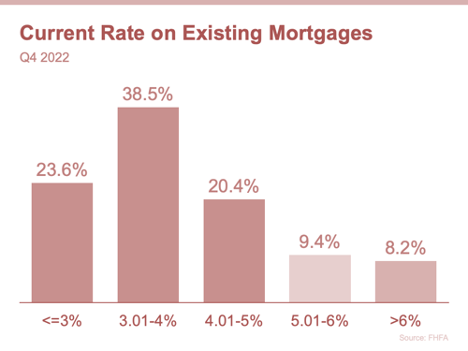
    First, let’s look at the current rate on existing mortgages. According to the Federal Housing Finance Agency (FHFA), as of the fourth quarter of last year, over 80% of existing mortgages have a rate below 5%. That’s significant. And, to take that one step further, over 50% of mortgages have a rate below 4% (see graph below):

    Now, there’s a lot of talk in the media about a potential foreclosure crisis or a rise of homeowners defaulting on their loans, but consider this. Homeowners with such good mortgage rates are going to work as hard as they can to keep that mortgage and stay in their homes. That’s because they can’t go out and buy another house, or even rent an apartment, and pay what they do today. Their current mortgage payment is more affordable. Even if they downsize, with today’s higher mortgage rates, it could cost more.

    Here’s why this gives the housing market such a solid foundation today. Having so many homeowners with such low mortgage rates helps us avoid a crisis with a flood of foreclosures coming to market like there was back in 2008.

    2. The Amount of Homeowner Equity
    Second, Americans are sitting on tremendous equity right now. According to the Census and ATTOM, roughly two-thirds (around 68%) of homeowners have either paid off their mortgage or have at least 50% equity (see chart below):

    In the industry, the term for this is equity rich. This is significant because if you think back to 2008, some people had to make the difficult decision to walk away from their homes because they owed more on the home than it was worth.

    But this time, things are different because homeowners have built up so much equity over the past few years alone. And, when homeowners have that much equity, it helps us avoid another wave of distressed properties coming onto the market like we saw during the crash. It also creates an extremely strong foundation for today’s housing market.

    We are in one of the most foundationally strong housing markets of our lifetime because homeowners are going to fight to keep their current mortgage rate and they have a tremendous amount of equity. This is yet another reason things are fundamentally different than in 2008.

  • How to Perform a Landlord Background Check

    You’ve found the perfect new apartment or rental house. You love the neighborhood. Your application has been approved. You’re ready to sign on the dotted line, right?

    Not so fast. How much do you know about your soon-to-be landlord, property manager or property management company?

    There are lots of reasons why you should take the time to ask yourself, “Who is my landlord?” before you commit. Your rent payment is likely one of your biggest monthly expenses, and if you’re signing a lengthy lease, you should find out as much as you can about the person who owns and operates the place you’ll call home.

    Check out these five easy ways to check your landlord’s reputation before signing your lease.

    1. Google them
    The internet has a way of quickly uncovering all kinds of misdeeds, so start with a simple Google search of your landlord’s name or property management company, as well as the property address.
    Hell hath no fury like a renter scorned, so you’ll also want to peruse some of the many apartment and landlord review sites online that let tenants anonymously review their apartment complex, landlord or property management company.

    2. Search public records
    There’s a wealth of information about properties and landlords available via your local government agencies, and you’re usually able to check your landlord for free. Consider it your landlord background check!
    Your county courthouse should have ownership records searchable by address, so you can find the legal name of the person or company that owns the property — it may not be your landlord directly.
    You can also search for code violations, foreclosure proceedings, evictions, and small claims court settlements, all of which should be red flags for renters.

    3. Get to know your (future) neighbors
    If you’re moving into an apartment complex with multiple units, take a few minutes to walk around the grounds out of earshot of the landlord.
    If you see any tenants out and about, strike up a conversation about what it’s like to live there. Ask how long they’ve lived there — renewed leases are a good sign of a positive landlord-tenant relationship. Get a few pros and cons, ask how complaints are handled, and find out if they have any gripes about management.
    If you’re moving into a single-family home, ask the landlord if they’d mind you having a conversation with the current tenants.
    If you don’t have access to any other tenants, find a neighborhood-specific blog or Facebook group to join. Tell people you’re thinking of moving into the area and ask if they know anything about the property manager.

    4. Be the interviewer
    Landlords ask you questions when you apply to live in their property, so why shouldn’t you ask them questions too?
    Ask them how they handle repair requests. Find out if the landlord lives on-site, nearby or in a different state. Ask how the move-in and move-out process goes. Learn more about their process for requesting entry to your unit.
    They should be able to easily answer your questions and address all of your concerns.

    5. Go with your gut
    When in doubt, trust your instincts. If you experience any of the following:

    • The price seems too low for the apartment size, amenities, or neighborhood
    • The lease terms are unclear
    • The landlord is hesitant to answer your questions
    • The landlord tries to rush you through the rental process

    Think twice — and keep looking.