Category: Market Outlook

  • 2023 Year-End Home Price Forecasts

    While I cannot provide real-time data or predictions, I can give you an overview of factors that may influence home price forecasts for the year-end of 2023. The real estate market is influenced by various factors, including economic conditions, supply and demand dynamics, interest rates, and government policies. Here are a few key considerations:

    • Market Conditions: The overall strength of the housing market, including factors like job growth, consumer confidence, and population trends, can impact home prices. If the economy remains robust and demand for housing stays high, it could lead to price appreciation.
    • Inventory Levels: The supply of homes on the market plays a significant role in determining home prices. If there is a shortage of inventory, as has been the case in many markets in recent years, it can drive up prices. On the other hand, an increase in housing supply could potentially moderate price growth.
    • Interest Rates: Mortgage interest rates have a direct impact on housing affordability. Higher interest rates can reduce buying power and potentially slow down price growth. Conversely, lower interest rates can stimulate demand and support price appreciation.
    • Government Policies: Government initiatives, such as tax incentives, lending regulations, and housing programs, can influence the real estate market and impact home prices. Changes in policies related to housing could have implications for price trends.

    It’s important to note that the real estate market can be unpredictable and subject to unforeseen events or economic shifts. Therefore, it’s always advisable to consult with local real estate experts or economists who can provide more accurate and up-to-date insights specific to your area. They can analyze local market trends and provide more accurate year-end forecasts based on the prevailing conditions in your region.
  • Gen Z: The Next Generation Is Making Moves in the Housing Market

    Generation Z, born between the mid-1990s and early 2010s, is starting to make its mark in the housing market. Here are some ways this upcoming generation is influencing the real estate industry:

    • Homeownership Aspirations: Despite being younger, many Gen Z individuals already have aspirations of homeownership. They understand the value of investing in real estate and building equity over time.
    • Tech-Savvy Approach: Gen Z is the first generation to grow up with technology at their fingertips. They are comfortable using online resources, mobile apps, and social media platforms to search for homes, connect with real estate agents, and gather information about the market.
    • Sustainable and Energy-Efficient Homes: Gen Z places a strong emphasis on sustainability and environmental consciousness. They are more likely to prioritize energy-efficient features and eco-friendly materials when buying or renting a home. Builders and developers are taking note of this trend and incorporating green features into their projects.
    • Urban Lifestyle Preferences: Gen Z tends to lean towards urban living, valuing walkability, access to amenities, and proximity to work and entertainment. They are more likely to choose properties in urban areas or mixed-use developments that offer a live-work-play environment.
    • Demand for Affordable Housing: Affordability is a significant concern for Gen Z, given the financial challenges they face, including student loan debt. As they enter the housing market, they are seeking affordable options, such as starter homes, co-living arrangements, or homes in up-and-coming neighborhoods.
    • Flexible Living Spaces: Gen Z values flexibility and adaptability in their living spaces. They prefer open floor plans that can be easily customized to suit their needs and changing lifestyles. Homebuilders are responding by offering versatile floor plans that can accommodate various uses.
    • Virtual and Remote Homebuying: The COVID-19 pandemic has accelerated the adoption of virtual homebuying tools and remote transactions. Gen Z, being digital natives, is comfortable with these technologies and is likely to embrace virtual tours, online mortgage applications, and remote closings.

    Real estate professionals should pay attention to the preferences and needs of Gen Z as they become an increasingly influential force in the housing market. Adapting marketing strategies to reach this generation, leveraging technology, and understanding their unique preferences can help real estate agents connect with and serve Gen Z buyers and renters effectively.

  • Today’s Housing Market Has Only Half the Usual Inventory

    The current housing market is experiencing a significant shortage of inventory, with only about half the usual number of homes available for sale. This low inventory situation has several implications for both buyers and sellers:

    1. Increased Competition: With fewer homes on the market, there is increased competition among buyers. This can lead to bidding wars and higher sale prices, making it more challenging for buyers to find and secure a home.
    2. Faster Sales: Limited inventory often results in homes selling more quickly. Sellers may receive multiple offers and have the advantage of choosing the most favorable terms for their sale.
    3. Rising Home Prices: The imbalance between supply and demand contributes to rising home prices. As buyers compete for a limited number of homes, prices tend to increase.
    4. Seller’s Market: The low inventory situation creates a seller’s market, meaning sellers have the upper hand in negotiations. They may have more leverage to negotiate favorable terms and conditions, such as higher sale prices or shorter closing timelines.
    5. Limited Options for Buyers: With fewer homes to choose from, buyers may have to compromise on their preferences or expand their search areas. It’s essential for buyers to be flexible and prepared to act quickly when a suitable property becomes available.
    6. Potential for Higher Profits: Sellers who list their homes in a low inventory market may benefit from higher sale prices and a potentially faster sale. This can result in higher profits compared to selling in a market with more inventory.

    It’s important to note that the low inventory situation can vary by location and market conditions. Working with a knowledgeable real estate agent who understands the local market can be invaluable in navigating this challenging environment. They can provide insights and strategies to help buyers and sellers achieve their goals in a competitive market.

  • The Impact of Seasonality on the Real Estate Market

    Seasonality has a significant impact on the real estate market, influencing both buyer and seller behavior. Here are some key points to consider when discussing the impact of seasonality:

    1. Demand and Inventory: The number of buyers and sellers in the market fluctuates throughout the year. Generally, the spring and summer months see increased activity, as families prefer to move during warmer weather and before the new school year begins. This results in higher demand and more inventory during these seasons.
    2. Pricing: Seasonality can also affect home prices. During the peak season, when there is higher demand, sellers may be able to command higher prices for their properties. Conversely, during the off-peak season, sellers may need to adjust their prices to attract buyers.
    3. Competition: The level of competition among buyers and sellers can vary based on the season. In a seller’s market, when demand exceeds supply, buyers may face more competition and multiple offer situations. On the other hand, in a buyer’s market, when there is an excess of inventory, sellers may need to be more competitive in pricing and marketing their properties.
    4. Market Trends: Real estate market trends can vary throughout the year. For example, in areas with vacation or second-home markets, there may be a surge of buyers during the holiday season or summer months. Additionally, areas with strong university or college presence may experience increased rental demand during the start of the academic year.
    5. Regional Differences: It’s important to note that the impact of seasonality can differ based on the region. For example, in colder climates, the winter months may experience a slowdown in real estate activity due to weather conditions. Conversely, in warmer climates, the winter months may be considered the peak season.

    Understanding the impact of seasonality on the real estate market can help both buyers and sellers make informed decisions. Real estate professionals should be aware of these patterns and adjust their strategies accordingly to maximize their success in any given season.

  • Strongest Real Estate Market of Our Lifetime

    When you look at the numbers today, the one thing that stands out is the strength of this housing market. We can see this is one of the most foundationally strong housing markets of our lifetime – if not the strongest housing market of our lifetime. Here are two fundamentals that prove this point.

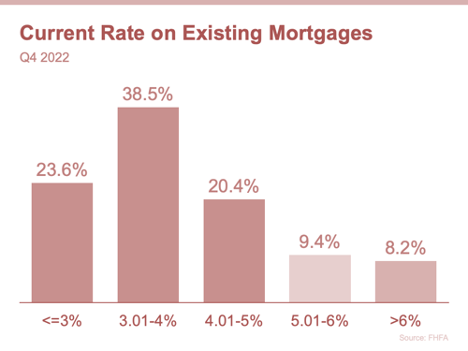
    1. The Current Mortgage Rate on Existing Mortgages
    First, let’s look at the current rate on existing mortgages. According to the Federal Housing Finance Agency (FHFA), as of the fourth quarter of last year, over 80% of existing mortgages have a rate below 5%. That’s significant. And, to take that one step further, over 50% of mortgages have a rate below 4% (see graph below):

    Now, there’s a lot of talk in the media about a potential foreclosure crisis or a rise of homeowners defaulting on their loans, but consider this. Homeowners with such good mortgage rates are going to work as hard as they can to keep that mortgage and stay in their homes. That’s because they can’t go out and buy another house, or even rent an apartment, and pay what they do today. Their current mortgage payment is more affordable. Even if they downsize, with today’s higher mortgage rates, it could cost more.

    Here’s why this gives the housing market such a solid foundation today. Having so many homeowners with such low mortgage rates helps us avoid a crisis with a flood of foreclosures coming to market like there was back in 2008.

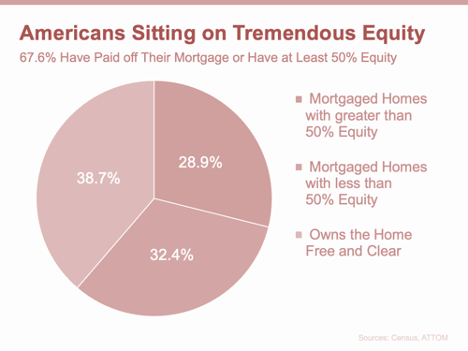
    2. The Amount of Homeowner Equity
    Second, Americans are sitting on tremendous equity right now. According to the Census and ATTOM, roughly two-thirds (around 68%) of homeowners have either paid off their mortgage or have at least 50% equity (see chart below):

    In the industry, the term for this is equity rich. This is significant because if you think back to 2008, some people had to make the difficult decision to walk away from their homes because they owed more on the home than it was worth.

    But this time, things are different because homeowners have built up so much equity over the past few years alone. And, when homeowners have that much equity, it helps us avoid another wave of distressed properties coming onto the market like we saw during the crash. It also creates an extremely strong foundation for today’s housing market.

    We are in one of the most foundationally strong housing markets of our lifetime because homeowners are going to fight to keep their current mortgage rate and they have a tremendous amount of equity. This is yet another reason things are fundamentally different than in 2008.

  • Housing Outlook 2023

    What will the new year bring for homebuyers, homeowners, and home sellers? Lower or higher home prices? Higher or lower mortgage interest rates? Or a continuation of the overheated pandemic-inspired housing market?

    There’s no question that the blistering housing market of the past three years was hard on homebuyers. By October 2022, the average mortgage interest rate for a 30-year fixed is 7.24%, more than double the 3.22% level in January 2022.

    According to Fannie Mae, the combination of high inflation, monetary policy tightening, and a slowing housing market is “likely to tip the economy into a modest recession in the first quarter of 2023.”

    Many economic forecasters believe housing prices will decline, but that homebuyers shouldn’t fear buying during a declining market. Morgan Stanley predicts a 7% dip in home prices for 2023 that would return housing prices to where they were in January 2022 – 32% higher than prices were in March 2020 when the pandemic began. Economists with Goldman Sachs and Moody Analytics are predicting 5% to 10% declines in home prices, based on a lack of homebuyer affordability, slowing housing sales, fewer mortgage applications and a looming recession, however mild.

    BusinessInsider.com reports that the Federal Reserve’s overnight rate hikes have raised mortgage interest rates, pushing affordability to new lows, but that a recession could bring interest rates down again. That combined with softer homebuying demand due to inflation and sellers lowering their prices would make spring and summer 2023 great times to buy a home.